WHAT DO ALLIGATORS EAT?


Not to be confused with crocodiles, alligators are only native to the United States and China. In America they are found in the southeast United States: all of Florida and Louisiana, the southern parts of Georgia, Alabama and Mississippi, coastal South and North Carolina, Eastern Texas, the southeast corner of Oklahoma and the southern tip of Arkansas. The majority of American alligators inhabit the states of Florida and Louisiana, with over a million alligators in each state.

American alligators live in freshwater environments, such as ponds, marshes, wetlands, rivers, lakes, and swamps, as well as brackish environments. The Chinese alligator currently is found only in the Yangtze River valley and is extremely endangered, with only a few dozen believed to be left in the wild. Indeed, far more Chinese alligators live in zoos around the world than can be found in the wild.

So, just what do alligators eat?

What alligators eat will depend on its age and how big it is. When young, alligators will eat small fish, insects, snails, crustaceans, and worms. As they mature into a larger beasts,  they will eat progressively larger prey. This will include larger fish such as gar, turtles, various mammals such as water birds and deer, and other reptiles.  They will even consume carrion if they are sufficiently hungry. Adult alligators can take razorbacks and deer and are well known for killing and eating smaller alligators!

In areas where human populations encroach on alligator territories larger alligators are also known to ambush dogs. Attacks on humans are rare but not unknown. Unlike large crocodiles, alligators do not immediately regard a humans as prey, but they may still attack in self-defence if provoked.

Due to the design of their teeth alligators are unable to chew their food so their stomachs also often contain gizzard stones which are used to help break down and digest their food . 

For related articles click onto:
All about Dolphins
Alligator and Crocodile
Alligator
Are Zebras Black with White Stripes or White with Black Stripes?
Baby Elephants
Can Dolphins Kill Sharks?
Cheetah
Cheetah Facts, Videos and Photographs
Do Fish Sleep?
Dinosaur: Did Pterosaurs hang upside down?
Dinosaur Facts and Movie clips - The Spinosaur
Dinosaur: The Pterodactyl
Dinosaur: The Spinosaur
Dolphin
Elephant
Elephants
Flying Fish
Gorilla
How Big is the Blue Whale?
How Fast is a Cheetah?
How Fast is a Snail?
How Long can a Flying Fish Fly for?
How to Catch Crayfish
Kung Fu Panda
Living Dinosaur Shark - The frilled shark
LIVING DINOSAURS - The Coelacanth
Panda
Rango Facts and Movie Videos
Terra Nova - Dinosaur Trailer
The Blue Whale
The Coelacanth - a living, breathing fossil
The Differences Between Crocodiles and Alligators
The Differences Between Horses and Zebras?
The Snow Leopard
Ugly Animals
Venomous Snakes
What are Mycorrhizal Fungi?
What are Plant Macronutrients and Micronutrients?
What are Plant Nutrients?
What are Truffles?
What Causes Blue Hydrangeas to Turn Pink?
What Causes Moss in Lawns
How do Dolphins Breath when they Sleep?
What do Alligators Eat?
What do Chimpanzees Eat?
What do Cuckoos Eat?
What do Hedgehogs Eat?
What do Dolphins Eat?
What do Dolphins do?
What do Giraffes Eat?
What does the Great White Shark Eat?
What do Jaguars Eat?
What do Killer Whales Eat?
What do Koalas Eat?
What do Lions Eat?
What do Pandas Eat?
What do Peacocks Eat?
What do Polar Bears Eat?
What do Gorillas eat?
What do Snow Leopards Eat?
What do Tigers Eat?
What is an Alligator?
What is a Cheetah?
What is Chlorosis?
What is E.Coli?
What is Frankincense?
What is John Innes Base?
What is John Innes Compost?
What is a Leaf Mould Compost?
What is Cork Made of?
What is a Truffle?
What is a Wormery?
What is an Epiphyte?
What is an F1 Hybrid?
What is an Orchid?
What is Over-watering and How to Recognise it?
What is Pricking out?
What is Rhubarb Poisoning?
What is the Difference between African and Indian Elephants?
What is the Difference between a Fruit and a Vegetable?
What is the Difference between a Frog and a Toad?
What is the Difference between Currants, Raisins and Sultanas?
What is the Difference between a Moth and a Butterfly?
What is the Difference between a Rat and a Mouse?
What is the Difference Between a Tortoise and a Turtle?
What is the Difference between a Zebra and a Horse?
What is Saffron?
What is the World's Biggest Cat?
What is the Worlds Biggest Shark?
What is the Worlds Fastest Animal?
What is the Worlds Largest Amphibian?
What is the Worlds Largest Eagle?
What is the Worlds Largest Flower?
What is the Worlds Largest Insect?
What is the World's Largest Spider?
What is the Worlds Fastest Fish?
What is the Worlds most Poisonous Frog?
What is the World's most Poisonous Snake?
What is the most Poisonous Spider?
What is Tomato Blight?
When should you Re-pot an Orchid?
Where do Alligators Live?
Where do you find Alligators?
Where do Cheetahs Live?
Where do Lions Live?
Where do Killer Whales Live?
Where do Pandas Live?
Where do Snow Leopards Live?
Where do Tigers Live?
Why do Onions make you Cry?
Why do Leaves Change their Colour in the Autumn Fall
Why do Trees drop their Leaves in Autumn Fall
Why is the Sea Salty?
Why is the Sky Blue?
World's Largest Insect

Based on an article from http://en.wikipedia.org/wiki/Alligator
Photos care of http://sansrelecture.blogspot.com/2011/11/actualites-insolites-decouvrir_16.html

THE RAINFOREST


Rainforests are forests that are characterized by high rainfall, with definitions based on a minimum normal annual rainfall of 1750-2000 mm (68-78 inches). The monsoon trough - alternatively known as the intertropical convergence zone - plays a significant role in creating the climatic conditions necessary for the Earth's tropical rainforests.

Around 40% to 75% of all biotic species are indigenous to the rainforests. In fact it has been estimated that there may be many millions of species of plants, insects and microorganisms still undiscovered in tropical rainforests. Tropical rainforests have been called the 'Jewels of the Earth' and the 'World's Largest Pharmacy'. Why? Because over one quarter of natural medicines have been discovered here.

Rainforests are also responsible for 28% of the world's oxygen turnover, sometimes misnamed oxygen production, processing it through photosynthesis from carbon dioxide and consuming it through respiration.

Rainforests support a very broad array of fauna, including mammals, reptiles, birds and invertebrates. Mammals may include primates, felids and other families. Reptiles include snakes, turtles, chameleons and other families; while birds include such families as vangidae and Cuculidae. Dozens of families of invertebrates are found in rainforests.

Fungi are also very common in rainforest areas as they can feed on the decomposing remains of plants and animals. Many rainforest species are rapidly disappearing due to deforestation, habitat loss and pollution of the atmosphere.

The undergrowth in a rainforest is restricted in many areas by the poor penetration of sunlight to ground level. This makes it easy to walk through an undisturbed, mature rainforest. If the leaf canopy is destroyed or thinned, the ground beneath is soon colonized by a dense, tangled growth of vines, shrubs and small trees.

WHAT IS THE RAIN FOREST MADE UP OF?

A tropical rainforest is typically divided into four main layers, each with different plants and animals adapted for life in that particular area. These layers are as follows:

1. The Emergent layer

The emergent layer contains a small number of very large trees called emergents, which grow above the general canopy, reaching heights of 45–55 m, although on occasion a few species will grow to 70–80 m tall. They need to be able to withstand the hot temperatures and strong winds that occur above the canopy in some areas. Eagles, butterflies, bats and certain monkeys inhabit this layer.

2. The Canopy layer

The canopy layer contains the majority of the largest trees, typically 30–45 m tall. The densest areas of biodiversity are found in the forest canopy, a more or less continuous cover of foliage formed by adjacent treetops. The canopy, by some estimates, is home to 50 percent of all plant species, suggesting that perhaps half of all life on Earth could be found there. Epiphytic plants attach to trunks and branches, and obtain water and minerals from rain and debris that collects on the supporting plants. The fauna is similar to that found in the emergent layer, but more diverse.

A quarter of all insect species are believed to exist in the rainforest canopy. Scientists have long suspected the richness of the canopy as a habitat, but have only recently developed practical methods of exploring it.

3. Understorey or undercanopy layer

The understorey layer lies between the canopy and the forest floor. The understorey (or understory) is home to a number of birds, snakes and lizards, as well as predators such as jaguars, boa constrictors and leopards. The leaves are much larger at this level. Insect life is also abundant.

Many seedlings that will grow to the canopy level are present in the understorey. Only about 5% of the sunlight shining on the rainforest canopy reaches the understorey. This layer can be called a shrub layer, although the shrub layer may also be considered a separate layer.

4. Forest floor or shrub layer

The forest floor, the bottom-most layer, receives only 2% of the sunlight. Only plants adapted to low light can grow in this region. Away from riverbanks, swamps and clearings, where dense undergrowth is found, the forest floor is relatively clear of vegetation because of the low sunlight penetration. It also contains decaying plant and animal matter, which disappears quickly, because the warm, humid conditions promote rapid decay. Many forms of fungi growing here help decay the animal and plant waste.

The world’s rainforests - and therefore the world at large - are already at risk from catastrophic climate change. In less than 50 years we have seen the destruction of over half of the worlds rainforest environment due to logging and ‘slash and burn’ farming. However the loss of the rainforest continues to progress at an alarming rate - equivalent to an area of two football fields every second!

What is often not realised is that rainforests benefit everyone, and not just the local populations of where they are found. Rainforests store water, regulate rainfall, and are home to over half the planets biodiversity, but more importantly they play a critical role in helping to limit the amount of fossil fuel emissions that build up in our atmosphere every year by absorbing CO2 as part of their normal photosynthetic process. The trouble is that when they are cut down and burned, not only are they then unable to absorb these emissions, they actually release yet more CO2 into the atmosphere. Currently, rainforest destruction accounts for 17% of global CO2 emissions which is more than the global transport sector releases.

So where are the rainforests?

Many of the world's rainforests are associated with the location of the monsoon trough, also known as the intertropical convergence zone.

As the name suggets, tropical rainforests are rainforests in the tropics, and they are mainly found in the equatorial zone (between the Tropic of Cancer and Tropic of Capricorn). However, tropical rainforests are also present in Southeast Asia (from Myanmar (Burma) to Philippines, Malaysia, Indonesia, Papua New Guinea and northeastern Australia), Sri Lanka, sub-Saharan Africa from Cameroon to the Congo (Congo Rainforest), South America (e.g. the Amazon Rainforest), Central America (e.g. Bosawás, southern Yucatán Peninsula-El Peten-Belize-Calakmul), and on many of the Pacific Islands (such as Hawaiʻi). Tropical rainforests have been called the "Earth's lungs", although it is now known that rainforests contribute little net oxygen addition to the atmosphere through photosynthesis.

Why is the rainforest being destroyed?

Despite what some government groups are trying to promote, human greed is the main cause of rainforest deforestation. Incredibly, between May 2000 and August 2005, Brazil lost more than 132,000 square kilometers of forest — an area larger than Greece — and since 1970, over 600,000 square kilometers (232,000 square miles) of Amazon rainforest have been destroyed.

But what are the reasons behind why so much rainforest habitat is being systematically cut down and burned?

Well, here are a number of obvious causes, such as wood being used for the worlds timber magnets, land clearance for farming and road construction.

But that's not the whole story, because - contrary to belief - the trees in the Brazilian rain forest are probably the best protected anywhere on earth - at least in theory, but someone is still cutting them down and burning them.

For several years now, the Brazilian government has insisted that the rate of deforestation in the Amazon has declined sharply. But earlier this year, it suddenly jumped again, to a rate five times higher than last year.

These trees play a vital part in the management of global weather patterns. Why? Because they absorb carbon dioxide, which otherwise would contribute to climate change. That is why Brazil is under pressure to protect the forest.

Amazon settlers

Perhaps the biggest threat to the Amazon rain forest are the Amazon settlers as they burn down the trees to clear land for cattle.

Amazon settler Waldemar Vieira Neves understands this, but he says there are other considerations as well. He is is a small, wiry man, 64 years old, with sharp features and a deep sense of grievance.

‘…I know everyone thinks we're villains, but what people don't understand is how hard we have to work to scratch out a living. We were talking in a small clearing in the forest…’

He has lived there for 12 years, ever since the government offered him the opportunity to start a new life as an Amazon settler.

He used to live in the far north-east of Brazil, with no land and not much hope.

So, like tens of thousands of other settlers, he took the opportunity and did what the government wanted him to do - made a new home for himself in the forest and cleared the trees.

Criminal Activity 

Nowadays, Brazil's laws on deforestation are extremely strict.

No-one who farms in the rainforest is supposed to be allowed to cultivate more than 20% of the land he owns. The rest has to be left untouched, as a way of preserving the forest and protecting the environment.

But sometimes, says Waldemar, people feel they have to break the law. What else can you do if there is no other way to survive?

‘…people say we're destroying the forest, we're not. We're protecting it, we depend on it. But we have to find a way so that both we and the forest can survive…’

The settlers complain that they need more help in finding ways to make a living while keeping on the right side of the law.

They say they need education, not punishment, if the government wants them to farm the land but protect the trees at the same time.

Within the next few months, Brazilian President Dilma Rousseff, who came to office six months ago, will have to decide whether to veto proposals to relax the Forest Code, which restricts how much land in the Amazon region can legally be cultivated.

Farmers and big international agricultural business groups say they need to be able to farm more land to provide the food that the world demands.

Tough decisions

They want an amnesty for farmers who may have cleared forest land illegally in the past, proposing that - instead of being fined - farmers who have broken the law should be required to buy more forest, equivalent to what they have cut down, in return for an undertaking to leave it untouched.

Brazil now exports more beef than any other country in the world, and agriculture makes up a quarter of the country's entire economic output.

It is also the world's second biggest producer of soya, which is an essential ingredient in animal feed, and pressure from the huge soya producers south of the Amazon who are desperate to buy more land is pushing smaller farmers like Waldemar Vieira Neves deeper into the forest.

On the one hand, President Rousseff does not want to risk jeopardising Brazil's rapid economic growth by damaging its powerful agri-business interests. On the other, she is under intense pressure from environmentalists not to approve any law that could encourage more deforestation in the Amazon.

Before her election last year, she pledged to veto any plan that would weaken the Forest Code and, within the coming months, she is going to have to decide whether to honour that pledge.

For related articles click onto:
Acid rain and its effect on Wildlife
Amazing Tree Facts
British Government Creates Worlds Largest Marine Reserve Around Chagos Islands
Easter Island - a Lesson in Environmental Exploitation
How to Grow Plants
HMS Victory - Worlds Greatest Warship
How do you get Acid Rain?
How to Feed Birds?
Insect Eating Birds
Jellyfish Swarms - The Latest Man-Made disaster?
Light Pollution and the Decline in Bat Populations
Light Pollution and the Decline of Native Insects
Light Pollution - The Hidden Threat
The Amazon rainforest
The Bat Plant
The Causes of Acid Rain
The Effects of Acid Rain
The Island of Statues - Easter Island
The Layers of the Rainforest
The Plight of English Woodlands
The Rainforest
What are Prunes?
What can we do to Help Save the Rainforests
What causes Global Warming?
What do Jaguars Eat?
What is Acid Rain?
What are Bats?
What is Easter Island?
What is global warming?
What is the Difference between Global Warming and the Greenhouse Effect?
What is the Greenhouse Effect?
What is the Gulf Stream?
What is a Prune?
What is the Most Poisonous Snake in India?
What is Slash and Burn?
What is 'Slash and Burn' Farming and How does it Affect the Rainforests?
What is the Rainforest?
Where is the Rainforest?
Why are Tropical Rainforests so Important?
Why is the Amazon Rainforest being Destroyed?
Why Shark Fin Soup is Devastating World Shark Populations
Why Should we Protect the Rainforest?
Based on an article by http://en.wikipedia.org/wiki/Rainforest
Photo care of http://article.wn.com/view/2009/02/13/Government_to_tap_Brazils_agriculture_expertise/  and
http://www.geography.learnontheinternet.co.uk/topics/rainforest.html and http://amazonrainforestanimalsfacts.blogspot.com/ and http://true-wildlife.blogspot.com/2011/02/chameleon.html and http://naturescrusaders.wordpress.com/tag/endangeredthreatened/page/2/
Based on an article by http://www.bbc.co.uk/news/world-13981614
Photo care of http://article.wn.com/view/2009/02/13/Government_to_tap_Brazils_agriculture_expertise/

WHAT IS THE LARGEST COUNTRY?

CLICK HERE FOR THE NEW 'GARDEN OF EADEN’ WEBSITE AND SEED SHOP

If you want to know which is the largest country in the world according to its land mass, looking at a representation of the globe can be misleading. A prime example of this is size of the Great Britain - particularly on older map. Listed as the 80th largest country in the world, you can be forgiven for thinking otherwise.

Take a look below the 18th century map of europe as a typical example of how size does matter when you are a major global player.

Anyway, in order to answer the question 'What is the worlds largest country?', the answer is of course - Russia.

The worlds smallest country is Vatican city, but this is always disputed as to whether it really is a country in the first place. Next in line is Monaco - same issue, followed by Gibralter - also disputed. Failing those three, your best bet for smallest country in the world is Tokelou.  A territory of New Zealand in the South Pacific Ocean that consists of three tropical coral atolls with a combined land area of 10 km2


Click here for related articles:
Are Zebras Black with White Stripes or White with Black Stripes?
Can Flying Fish really Fly?
Cheetah Facts, Videos and Photographs
Do Fish Sleep?
Flying Fish
Gorilla
How do you find Truffles?
How Fast is a Cheetah?
How fast is a Snail?
How Long can a Flying Fish Fly for?
LIVING DINOSAURS - The Coelacanth
Panda
The Coelacanth - a living, breathing fossil
Ugly Animals
What are Mycorrhizal Fungi?
What are Plant Macronutrients and Micronutrients?
What are Plant Nutrients?
What Causes Blue Hydrangeas to Turn Pink?
What Causes Moss in Lawns
What do Pandas Eat?
What is Chlorosis?
What is Fibre?
What is Frankincense?
What is John Innes Base?
What is John Innes Compost?
What is a Leaf Mould Compost?
What is Cork Made of?
What is the World's Biggest Cat?
What is a Wormery?
What is an Epiphyte?
What is an F1 Hybrid?
What is an Orchid?
What is Over-watering and How to Recognise it?
What is Pricking out?
What is Rhubarb Poisoning?
What is the Difference between African and Indian Elephants?
What is the Difference Between Alligators and Crocodiles?
What is the Difference between a Fruit and a Vegetable?
What is the Difference between a Frog and a Toad?
What is the Difference between Currants, Raisins and Sultanas?
What is the Difference between a Moth and a Butterfly?
What is the Difference Between a Tortoise and a Turtle?
What is the Difference between a Zebra and a Horse?
What is Saffron?
What is the Biggest Fish in the World?
What is the Largest Country?
What is the Worlds Biggest Shark?
What is the Worlds Fastest Animal?
What is the Worlds Largest Amphibian?
What is the Worlds Largest Flower?
What is the Worlds Largest Insect?
What is the World's Largest Spider?
What is the Worlds most Poisonous Frog?
What is the Worlds Fastest Bird?
What is the Worlds Fastest Fish?
What is the World's most Poisonous Snake?
What is the Most Poisonous Spider?
When should you Re-pot an Orchid?
Where do Pandas Live?
Why do Onions make you Cry?
Why do Leaves Change their Colour in the Autumn Fall
Why do Trees drop their Leaves in Autumn Fall
Why is the Sea Salty?
Why is the Sky Blue?
World's Largest Insect

Based on an article from http://en.wikipedia.org/wiki/Tokelau
Images care of http://www.antique-maps-online.co.uk/europe-map-16.htm

THE FLYING DUTCHMAN


Brought to popular attention by the excellent 'Pirates of the Carrabian' franchise, the 'Flying Dutchman' is now part of most peoples vocabulary. However, the flying Dutchman is not the figment of some faceless script writers imagination, it is in fact based on an old ghost ship legend that began over 400 years ago.

The legend of the Flying Dutchman

As the story is told, an ancient 17th Century Dutch sailing ship is occasionally seen by ship’s crews as their vessels battle the elements to clear the Cape of Good Hope at the southern tip of Africa. However, as with all good legends, the origins are clouded and disputed!

It appears that this ghost story has its origins in both Dutch and German legend. The most common is a tale about a Captain Hendrick Vanderdecken, who set sail in 1680 from Amsterdam to Batavia in Dutch East India, and disappeared in a gale while rounding the cape.

It was said that Vanderdecken ignored the danger and pressed on into the teeth of the tempest. The ship foundered, sending all aboard to their deaths. As punishment for his foolishness Vanderdecken and his ship are doomed to spend eternity fighting the tempest at the Cape.

But there is a second version of the story. One that tells of a Captain Bernard Fokke who was infamous for the uncanny speed of his trips from Holland to Java. So fast was his ship that people believed he was in league with the devil!

A third version changes the name to van Straaten, and yet a fourth version claims the captain’s name was Ramhout van Dam. In all of the stories, the ship remains unnamed. It seems that the reference to the “Flying Dutchman” is used to describe the cursed captain and not the ship.

According to most versions, the captain refuses to retreat in the face of the storm. In yet other stories, some terrible crime occurs on the ship, or the crew is struck by the plague and is not allowed to enter any port. For whatever the reason, the ship and its crew are doomed to sail forever.

While there is general agreement that the Lost Dutchman is merely a legend, there have been actual reported sightings of a 17th Century sailing ship battling the elements at the Cape of Good Hope over the years.

The first reference in print to the ship appears in Chapter VI of A Voyage to Botany Bay (1795) attributed to George Barrington (1755–1804):

I had often heard of the superstition of sailors respecting apparitions, but had never given much credit to the report; it seems that some years since a Dutch man of war was lost off the Cape of Good Hope, and every soul on board perished; her consort weathered the gale, and arrived soon after at the Cape. Having refitted, and returning to Europe, they were assailed by a violent tempest nearly in the same latitude. In the night watch some of the people saw, or imagined they saw, a vessel standing for them under a press of sail, as though she would run them down: one in particular affirmed it was the ship that had foundered in the former gale, and that it must certainly be her, or the apparition of her; but on its clearing up, the object, a dark thick cloud, disappeared. Nothing could do away the idea of this phenomenon on the minds of the sailors; and, on their relating the circumstances when they arrived in port, the story spread like wild-fire, and the supposed phantom was called the Flying Dutchman. From the Dutch the English seamen got the infatuation, and there are very few Indiamen, but what has some one on board, who pretends to have seen the apparition.

Perhaps the first officially reported sighting occurred in 1835 when a crew of a British ship was rounding the cape and observed a “phantom ship” approaching in the shroud of a severe storm. The British crew said the vessel appeared to be on a collision course, but then it suddenly vanished.

The H.M.S. Bacchante encountered the Flying Dutchman again in 1881, also at the cape. The following day one of the two men that made the sighting fell to his death from the rigging, thus enhancing the story to include a curse on those that see the ghostly vessel.

A more recent sighting was made by people on the shore in March, 1939. What was astounding was that it was seen by dozens of people who all gave a detailed description of a Dutch merchantman from the 17th Century.

The most famous witness ever to have seen the Flying Dutchman was the future King George V of England. His tutor, Dalton, recorded the sighting as follows:
At 4 a.m. the Flying Dutchman crossed our bows. A strange red light as of a phantom ship all aglow, in the midst of which light the masts, spars, and sails of a brig 200 yards distant stood out in strong relief as she came up on the port bow, where also the officer of the watch from the bridge clearly saw her, as did the quarterdeck midshipman, who was sent forward at once to the forecastle; but on arriving there was no vestige nor any sign whatever of any material ship was to be seen either near or right away to the horizon, the night being clear and the sea calm. Thirteen persons altogether saw her ... At 10.45 a.m. the ordinary seaman who had this morning reported the Flying Dutchman fell from the foretopmast crosstrees on to the topgallant forecastle and was smashed to atoms.
The last recorded sighting occurred at Cape Town in 1942 when four witnesses saw a sailing ship enter Table Bay and then disappear before their eyes.

For related articles click onto:
All about Valencia
American Revolution: The truth behind the Boston Tea Party
AMSTERDAM: The Rembrandt Museum
Ancient Olympic Games
ATHENS: How to get to Athens City from Athens International Airport
ATHENS: The Arch of Hadrian
ATHENS: The Caryatids
ATHENS: The Tower of the Winds
Bass Reeves
BATH: Roman Baths
Caesar
Charles Darwin's Greatest Experiment
Charles Darwins Legacy - 200 years on
Cleopatra's Needle
Christopher Columbus
Cowboys and Lawmen: Who was Bass Reeves?
Cowboys and Lawmen: Who was Wyatt Earp?
Darwin
Darwin's Theory of Evolution
EGYPT: What is a Mummy?
EGYPT: Where is the river Nile?
EGYPT: Where is the source of the Nile?
ENGLAND: Hever Castle
ENGLAND: Knole House - the Ghosts!
ENGLAND: Sissinghurst
FRANCE: The Palais des Papes
Hever Castle
ITALIAN HISTORY: Who was Christopher Columbus?
ROMAN ENGLAND: Who was Gnaeus Julius Agricola?
GREECE: The Ancient Olympics
GREEK HISTORY: Who was Archimedes?
Guy Fawkes and the Gunpowder  Plot
How to get to Herculaneum from Sorrento
How to get to Naples Archaeological Museum from Sorrento
How to get to Pompeii from Sorrento?
How to get to Sorrento from Naples International Airport
How to get to Sorrento from Naples International Airport?
How to get to Valencia beach from Valencia city
Hot Spa
ITALIAN HISTORY: Who was Christopher Columbus?
ITALIAN HISTORY: Who was Julius Caesar?
ITALY: Rome Pictures
ITALY: What is Pompeii?
ITALY: Where is Pompei?
Knole House and the Ghost with no Name
LONDON: Big Ben
LONDON: Buckingham Palace
LONDON: Cleopatra's Needle
LONDON: The Houses of Parliament
LONDON: The London Eye
LONDON: The Tower of London
LONDON: Who was Guy Fawkes?
MARRAKECH: The Saadian Tombs
MOROCCO: The Jemaa el-Fnaa
PARIS: The Arc de Triomphe
PARIS: Where is the Eiffel Tower?
Queen Victoria
Rembrandts House
Rembrandt Museum
Roman England: The Kings Bath
Roman Food
Rome: How to get to Villa D'Este from Rome
Rome: How to make Roman bread - Panis
RHS Wisley Gardens - A Photographic Walk Through
RMS TITANIC - Father Frank Brownes Photographs
Rome: Gladiator Graveyard Discovered!
Rome: How to get to Villa Adriana from Rome
Rome: How to get to Villa D'Este from Rome
Rome: Julius Caesar
Rome: Opening Times for Villa D'Este
Rome: Photographs of and around the Colosseum at Night
ROME: The Colosseum
ROME: The Pantheon
Rome: The Pantheon
Rome: Villa Adriana - Tivoli
ROME: Villa d'Este
Rome: What did Gladiators Eat?
Rome: What did the Romans Eat?
ROME: What was a Gladiator?
Rome: Who were the Ancient Gladiators?
ROMAN HISTORY: What did the Romans Eat?
Sissinghurst
Sissinghurst Gardens - a secret history
SPAIN: Valencia
SPAIN: Valencia
The Alamo
The Assassination of Lincoln
The Eiffel Tower
The Evolution and Devolution of Man - Finally explained
The Gunpowder Plot
The History of the Olympic Games
The Mary Celeste
The Olympic Games
The Olympic Medal
The Sinking of the Titanic
The Flying Dutchman
Titanic Pictures
Titanic Survivors
Titanic: The last radio transmissions
The Titanic
The Truth about the Alamo
VALENCIA: The Lonja de la Seda
VALENCIA: La Lonja de la Seda
VALENCIA: The Turia River
Valencia - How to get to Valencia City from Valencia Airport
Was Abraham Lincoln a Vampire?
What are Clogs?
What is the Flying Dutchman?
What to do in Valencia
Where are Clogs from?
Where is the Nile?
Where is Pompei?
Where is Sissinghurst?
Where was Abraham Lincoln from?
Wisley
Who was Abraham Lincoln?
Who was Archimedes?
Who was Charles Darwin
Who was Guy Fawkes?
Who was Julius Caesar?
Who was Queen Victoria?
Wyatt Earp
Based on an article from http://perdurabo10.tripod.com/ships/id19.html and http://en.wikipedia.org/wiki/Flying_Dutchman Photo care of http://listverse.com/2009/12/27/top-10-famous-real-ghosts/ and http://hasnulyakin.blogspot.com/2011_05_01_archive.html and http://u2worlds.com/index.php?topic=353.0 and http://neosurrealismart.com/modern-art-prints/?artworks/ghost-ship-series-the-ninth-wave.html&fullsize and http://www.allmoviephoto.com/photo/2007_potc_at_worlds_end_017.html

HOW TO GROW LEMONS FROM SEED?


Growing a lemon trees from seed is surprisingly straight forward, and something that anyone can do if they have a warm, sunny windowsill. Getting the seed is probably the hardest part. You can either buy on-line through a specialist supplier or  if you only want a few, collect your own from shop bought fruit.

Cut open the fruit and once you have exposed the seed, remove the seed and wash off any fruit residue. You should always clean seed collected from within fruiting bodies as they contain chemicals which actively prevent seed germination.

Place the ‘clean’ seed into a glass of water and discard any that immediately float to the surface as these will not be viable – be aware that smaller seed may rise as air bubbles form on the surface of the seed coat. If you have a variety of seed sizes you may also wish to discard any that look undersized as these are unlikely to have a large enough store of energy required for successful germination. Once you have selected your seed it can be dried off and stored in an envelope until required.

Lemon seed – like all citrus – have a natural dormancy period and so will require a period of cold temperature in order to initiate germination. Luckily, citrus fruits are usually pre-chilled as they are transported using a 'cool chain' system.

If not, this can be overcome by placing the seed into the vegetable compartment of any household fridge and left for a few weeks. First, secure the seed into a paper towel by folding the towel it back on itself a couple of times, then place into a plastic bag or sterile food container before leaving it in the fridge.

After approximately three weeks - although they can be left in there for a month or so should they need to be – they can be removed from the fridge ready for potting on. Soak the seeds for a couple of hours or so before planting them into 2-3 inch pots. Only sow 1 seed per pot using a good quality, free draining soil based compost such as John Innes seed or No1, then water in.

If you can, place the pots into a heated propagator at a temperature of 16 degrees Celsius, otherwise transfer them to a warm, bright position such as a kitchen windowsill. Water periodically so that the compost doesn’t dry out, but make sure that the compost is never left waterlogged either.

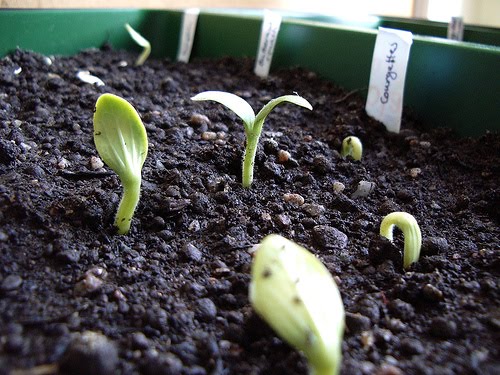
Germination should occur anytime from 4 – 6 weeks, but don’t worry if it takes a little longer as lemon seeds have been known to take several months before they show.

The newly emerged seedlings can be left in their pots for a further 3 – 6 months depending on how they develop but once they get to about 4 or 5 inches they can be potted on to the next size pot using a John Innes ericaceous mix or No2 potting compost. So long as there are no frosts predicted the young lemon plants can be put out side to harden off over the next two to three weeks.

During the growing period they can be regularly watered and feed with a water soluble fertilizer once a week. You can often get yellowing of the leaves with lemons due to chlorosis but this can be dealt with by feeding with an acidic plant food.

Tip out the seedling depending on whether you are growing your lemon plant as a bush, wall shrub or standard, or you can leave it alone, allowing it to take on its natural shape.

Although relatively hardy, keep your young lemon plant inside for its first winter. For subsequent winters it can be left or protected depending on the weather in you area.

For more information click onto:
Agave
Banana Plants
Buy Melon Seed
Can You Over-Winter Citrus Outside?
Cold Hardy Citrus Varieties for Over-Wintering Outside
Detox you Body with Fresh Fruit
Growing Orange Trees from Seed
How do you Harden off Seedlings?
How to Compost
How to Germinate and Grow Melon Plants from Seed
How to Germinate and Grow Okra from Seed Indoors
How to Germinate and Grow Watermelon Seed Indoors
How to Grow Agave from Seed
How to Grow Aubergines From Seed
How to Grow Avocado from Seed
How to Grow Banana Trees from Seed
How to Grow the Baobab from Seed
How to Grow Citrus from Seed
How to Grow Citrus Trees
How Grow Courgettes from Seed
How to Grow Celery from Seed
How to Grow Cucumbers from Seed
How to Grow Cauliflowers from Seed
How to Grow Cucumbers from Seed
How to Grow From Seed
How to Grow Geraniums from Seeds
How to Grow Marrows from Seed
How to Grow Melons
How to Grow Melons in a Greenhouse
How to Grow Eggplants from Seed
How to Grow Lemons from Seed
How to Grow Melon Plants from Seed Outdoors
How to Grow an Orange Tree from Seed
How to Grow Orchids
How to Grow Palm Trees from Seed
How to Grow the Sago Palm from Seed
How to Grow Vegetables?
How to Grow Watermelon Plants from Seed Outdoors
How to Grow Wisteria
How to Over-Winter Citrus Plants outside
Sorrento Lemons
The Banana Tree
What is a Baobab tree?
The Lemon Tree
The Snowdrop
Vitamin A Food
What is Agave?
What is Composting?
Why is Fresh Fruit so Good for You?
Photo care of http://www.mostlymaths.net/ and http://ourbelovedearth.blogspot.com/2010/01/giy-grow-your-own-lemon-trees-from-seed.html

WHAT IS A SNOW LEOPARD?


Snow leopards live in the high rhododendron forests of the Himalayas and have been relentlessly pursued by man because of their remarkable coat. While it is now protected by laws banning the sale of its fur, the high prices that such furs command means that illegal hunting still goes on.

It has had full protection in India since 1952 and also enjoys year round protection in the USSR. Despite this and the fact that, on the recommendation of the international furriers association, it has become illegal to possess the fur of the snow leopard, snow leopard coats still make their way on to the market.

The snow leopard breeds less prolifically in captivity than lions or tigers, and its life expectancy in a zoo is 20 years. With that in mind, emergency action must be taken to protect the snow leopard if it is to survive in the wild.

Snow leopard facts

The snow leopard is actually slightly smaller than the leopard, but its dense fur makes it look larger than it really is.

Compared with the other members of the big cat family, the snow leopard's tail is much longer in proportion to the rest of its body.

While being hunted for its fur is the main cause of the snow leopard's population decline, another significant reason is that man has over hunted its natural prey species.

Snow leopard cubs are dependent on their mother for at least a year after birth.

Snow leopard habitat

Snow leopards live in the high, rugged mountains of Central Asia, extending through twelve countries: Afghanistan, Bhutan, China, India, Kazakhstan, the Kyrgyz Republic, Mongolia, Nepal, Pakistan, Russia, Tajikistan, and Uzbekistan. The snow leopards range is roughly indicated on the map below by the red shading.

Snow leopard range covers 2 million square kilometers, about the size of Greenland or Mexico. China contains as much as 60% of snow leopard habitat. Sadly, the snow leopard has already disappeared from some areas where they formerly lived, such as certain parts of Mongolia.

Much of the snow leopard's habitat is located along international borders, some of them disputed between two countries. To some degree, this situation protects the cats because sensitive border areas are often closed to all public access, making them almost 'accidental' protected areas. But this also adds to the difficulty of studying snow leopards and establishing their current status and distribution.

Snow leopards prefer steep, broken terrain of cliffs, rocky outcrops, and ravines. These specialist environments are usually found between 3,000 and 5,400 meters above sea level. While this can be harsh and forbidding, this type of habitat provides good cover and clear views to help them sneak up on their prey unseen.

Each individual snow leopard inhabits a defined home range. However, these home ranges overlap and snow leopards do not defend them the way more aggressively territorial species do. Home range sizes vary greatly. It is thought that in Nepal and other areas where prey is abundant, cats inhabit home ranges as small as 30-65 square kilometers. In areas where there is less prey, such as Mongolia, snow leopards need more land in order to survive and their home ranges may be over 1,000 square kilometers in area.

As they move about their home ranges, the cats often travel along ridgelines and cliff bases, and choose bedding sites near cliffs or ridges with good views over the surrounding terrain.

Radio collar studies of snow leopards in the wild have indicated that they usually stay in one area for several days before moving on to another part of their home range. This is usually to another valley, where the likelyhood of more prey is hopefilly increased.

Surprisingly, they are quite capable of covering long distances in a single night, and in Mongolia they have even been documented to cross over 25 miles of open desert between mountain slopes.

Hopefully, as awearness of the snow leopards plight increases, their stunning natural beauty will be appreciated by generations to come.

So what do snow leopards prey on?

Snow leopards are carnivores and actively hunt their prey. However like all cats, they are opportunistic feeders, eating whatever meat they can find, including carrion and domestic livestock.

Amazingly, snow leopards are so powerful that they can kill animals three to four times their size, such as the Bharal, Himalayan Tahr, Markhor and Argali but will readily take much smaller prey such as hares and birds.

Unusual among cats, snow leopards will also eat a significant amount of vegetation as part of their normal diet.

The diet of the snow leopard will vary across its range and will be dependent on the time of year, and prey availability.

In the Himalayas, it preys mostly on bharals (Himalayan blue sheep) but in other mountain ranges such as the Karakoram, Tian Shan, and Altai, its main prey consists of the Siberian ibex and argali, a type of wild sheep, although this has become rarer in some parts of the snow leopard's range. Other large animals eaten include various types of wild goats and sheep (such as markhors and urials), other goat-like ruminants such as Himalayan tahr and gorals, plus deer, boars, and langur monkeys. Smaller prey consists of marmots, woolly hares, pikas, various rodents, and birds such as the snow cock and chukar.

The snow leopard is not averse to taking domestic livestock, which brings it into direct conflict with humans. Herders will kill snow leopards to prevent them from taking their animals.

Snow leopards have not been reported to attack humans, and appear to be among the least aggressive of all the big cats. As a result, they are easily driven away from livestock; they readily abandon their kills when threatened and may not even defend themselves when attacked.

Snow leopards prefer to ambush prey from above, using broken terrain to conceal their approach, and can leap as far as 14 meters (46 ft). They will actively pursue prey down steep mountainsides, using the momentum of their initial leap to chase animals for up to 300 metres (980 ft). They kill with a bite to the neck, and may drag the prey to a safe location before feeding. They consume all edible parts of the carcass, and can survive on a single bharal for two weeks before hunting again.

Breeding

The snow leopard will typically breed towards the end of winter. The female will come on heat twice a year. First for about a week, and then, if mating does not occur, for a second period of up to 70 days.

The female snow leopard will make her nest among the rocks, using her own fur as bedding. About 14 weeks after mating, she will give birth to a litter containing anything between two to five cubs.

When born, the cubs are much darker than their mother. they are blind for their first week and can crawl after ten days. By the time they are two months old, and they have learned to run and are eating solid food as well as suckling milk. By mid-summer they follow their mother when she goes out to hunt, and they will stay with her until they are about a year old.

Click here for related articles:
All about Animals
All about Chimpanzees
All about Hedgehogs
All about Lions
Alligator
Alligator and Crocodile
Are Zebras Black with White Stripes or White with Black Stripes?
Black Rhino Facts
Can Flying Fish really Fly?
Cheetah Facts, Videos and Photographs
Chimpanzee
Chimpanzee Facts
Do Fish Sleep?
Elephant Facts
Flying Fish
Giraffe Facts
Gorilla
Hedgehog facts
Hippo Baby
How Big is the Blue Whale?
How Fast is a Cheetah?
How fast is a Snail?
How Long can a Flying Fish Fly for?
How to get rid of Flies?
Is a Koala Bear a Bear?
Koala Facts
Kung Fu Panda
Lion
Lion Facts
LIVING DINOSAURS - The Coelacanth
Panda Bear
Panda Facts
Polar Bear
Polar Bear Facts
Rango Facts and Movie Videos
Snow Leopard facts
The Black Rhino
The Blue Whale
The Chinese giant salamander (Andrias davidianus)
The Coelacanth - a living, breathing fossil
The Cuckoo
The Coyote
The Differences Between Crocodiles and Alligators
The Differences Between Horses and Zebras?
The Duck-Billed Platypus
The Hippopotamus
The Jaguar
Tigers
The Koala
The Wolf
The Giant Salamander
The Hummingbird Moth
The Indian Rhino
The Koala
The Hippo
The Hippopotamus
The Mammoth
The Moose
The Ostrich
The Peacock
The Saber-Toothed Tiger
What are the Nine Sub-Species of Tiger?
What is a Cuckoo?
The Bengal Tiger
The Snow Leopard
The Whale
Tiger
Tiger Facts
Tigers
Ugly Animals
Venomous Snakes
What do Cuckoos Eat?
What is an Alligator?
What is a Dolphin?
What is a Flying Fish?
What is a Gorilla?
What is a Jaguar?
What is a Lion?
What is a Wolf?
What do Hedgehogs Eat?
What do Giraffes Eat?
What do Jaguars Eat?
What do Lions Eat?
What do Koalas Eat?
What do Pandas eat?
What do Peacocks Eat?
What do Polar Bears Eat?
What is a Portuguese man of war?
What do Snow Leopards Eat?
What do Tigers Eat?
What does a Wolf Eat?
What is a Duck-Billed Platypus?
What is a Papple?
What is a Koala?
What is a Hummingbird?
What is a Manatee?
What is a Snow Leopard?
What is the Biggest Dog in the World?
What is the Biggest Snake in the World?
What is the Difference between African and Indian Elephants?
What is the Difference Between Alligators and Crocodiles?
What is the Difference between a Frog and a Toad?
What is the Difference between a Millipede and a Centipede?
What is the Difference between a Moth and a Butterfly?
What is the Difference Between a Tortoise and a Turtle?
What is the Difference between a Zebra and a Horse?
What is the Most Poisonous Snake in India?
What is the World's Biggest Cat?
What is the Biggest Fish in the World?
What is the Worlds Biggest Shark?
What is the Worlds Fastest Animal?
What is the Worlds Largest Amphibian?
What is the Worlds Largest Eagle?
What is the Worlds Largest Flower?
What is the World's Largest Species of Tiger?
What is the World's Largest Spider?
What is the Worlds Fastest Bird?
What is the Worlds Fastest Fish?
What is the Worlds most Poisonous Frog?
What is the World's most Poisonous Snake?
What is the Most Poisonous Spider?
Where can you find Pandas?
Where can you Find a Polar Bear?
Where do Alligators Live?
Where do Cheetahs Live?
What do Chimpanzees Eat?
Where do Giraffes Live?
Where do Gorillas Live?
Where do Jaguars Live?
Where do Kangaroos Live?
Where do Koalas Live?
Where do Peacocks Live?
Where do Manatees Live?
Where do Lions Live?
Where do Polar Bears Live?

Where to find Jaguars?
Where to find Snow leopards?

Where do Snow Leopards Live?
Where do Tigers Live?
Where do Wolves Live?
Where do Zebras Live?
Where to find Red Squirrels?
Why are Pandas Endangered?
Why do Giraffes have Long Necks?
Wildlife
Wolf Conservation
Wolf Facts
World's Largest Insect
Zebra
Photo care of http://grosfelins.canalblog.com/ and http://www.treehugger.com/natural-sciences/afghanistan-protects-rare-bird-snow-leopard-and-other-species.html